
EXPLORE
OUR BLOG
Here you will find information about performance and health measurements as well as tips about athlete horse health monitoring, telemedicine cases and equine well-being.

Subscribe to our newsletter
LATEST ARTICLES
ALL ARTICLES

Horse warm-up: what are the best practices?
The horse’s warm-up is an important part of the training process that should not be skipped. To discover its partner, understand its thinking, but most importantly, get it in shape, find the best methods to succeed in its relaxation.

Muscular disorders in athletic horses
Horse muscular disorders can have serious consequences for both health and performance. Muscles are necessary for movement, balance, and stability, and any muscular loss or dysfunction can result in a deterioration in the horse’s performance and living conditions.
Cardiac pathologies in athletic horses
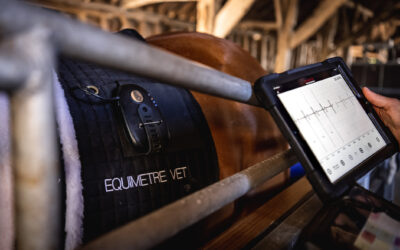
The cardiovascular system of the horse is remarkable. However, it can be subject to various cardiac pathologies. How does the heart work? What are its components?

The experience of Fouaad Mirza with EQUIMETRE
We had the chance to talk to Fouaad Mirza, international eventing rider, about his use of EQUIMETRE. Discover, through this discussion, how Fouaad Mirza trains his horses and integrates the connected sensor into his daily routine.

Hard/soft surface: how does it affect the horse’s locomotion?
Today, the vast majority of horses are more comfortable on soft surface which improves propulsion, shock absorption, and makes their locomotion lighter. But how does the ground affect the horse’s movements? Is it possible to quantify these variations in locomotion?

EQUISYM & Jean-Luc Mourier, international show jumper
Last November, we went to the Haras des Grillons (Valence) for the Winter Tour organised by Hubside Jumping. We had the opportunity to discuss with Jean-Luc Mourier, an international show jumper competing up to the CSI4* level, about his EQUISYM experience. Discover, through these few questions, the advantages of using EQUISYM for sport riders.
Horse’s back: how does it work?
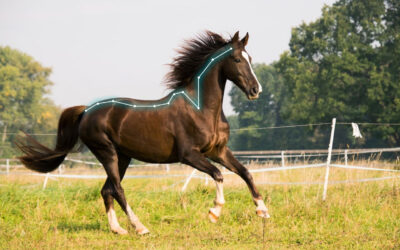
The horse’s back is a key element of equine biomechanics, linking the hindquarters to the forehand, and supporting the rider’s weight. The different anatomical structures and muscle chains that compose the horse’s back provide flexibility and propulsion.
Horse lameness: to what can it be linked?
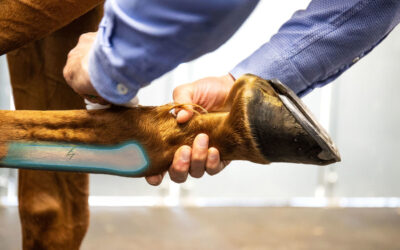
Detecting pathological asymmetry in its early form is one of the key issues in veterinary practice. This allows, besides other things, to optimise the treatment success through the implementation of an optimal care.
But to what asymmetries can be linked? Are specific lamenesses more common in forelimbs? Or in hindlimbs? And how can they be identified?

Horse back: anatomy and biomechanics
To better understand how the horse’s back works, it is necessary to discuss the various anatomical structures involved in the biomechanics of the horse’s back – and neck. But which anatomical structures are involved in back movement?
.